
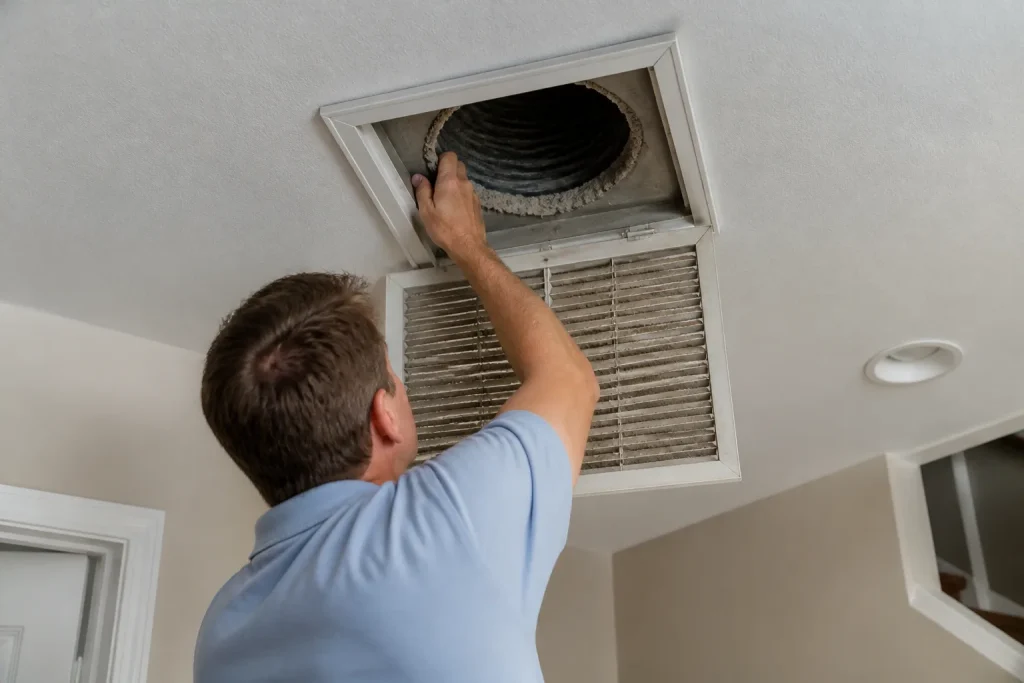
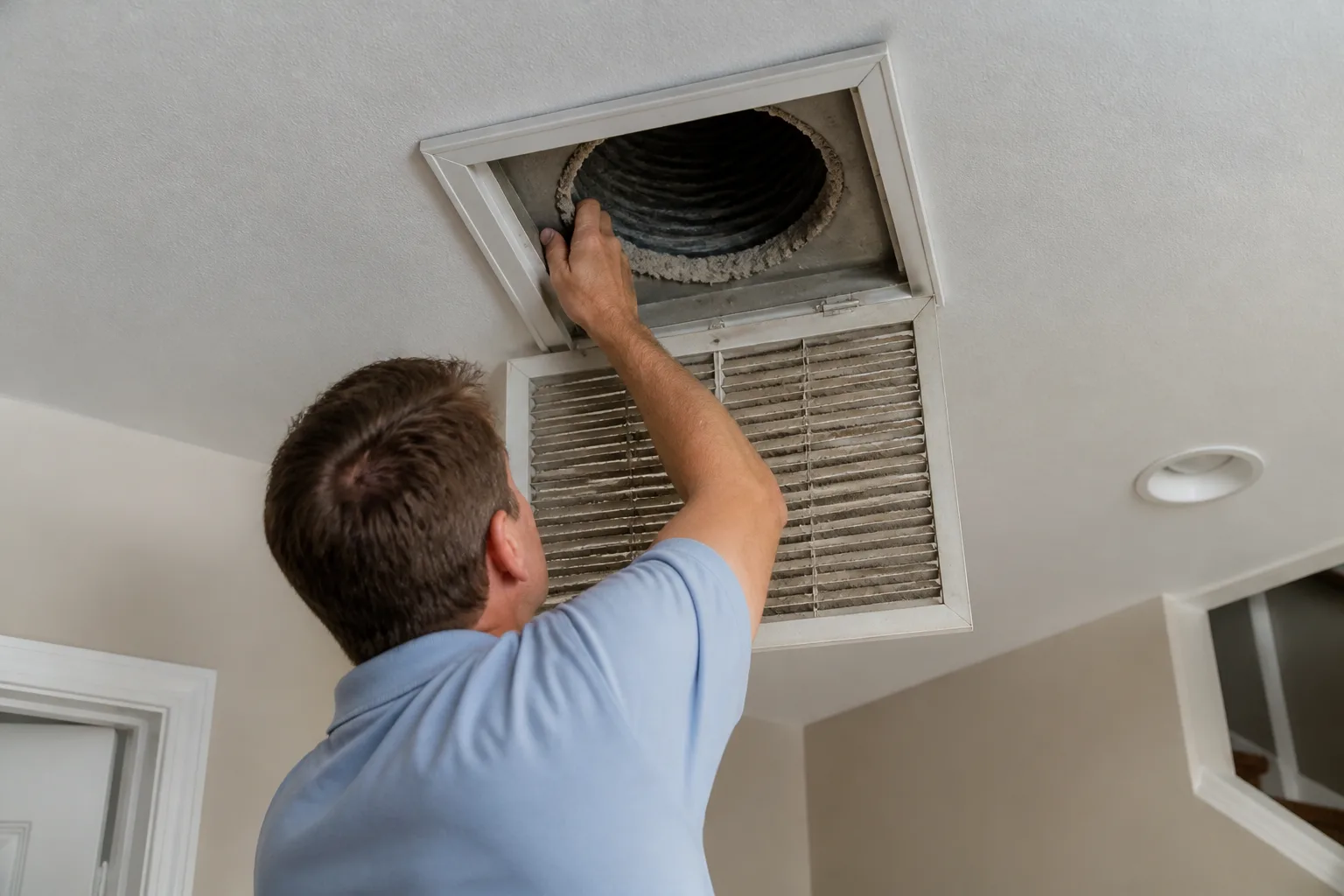
Air Duct Cleaning: Repair or Replace? How White Rock Homeowners Decide
Cleaning a duct system that leaks is like washing a car with the windows down. It looks better for a moment, then the road finds its way back in. Here in White Rock, where summer heat works the attic hard and most homes run flex duct through it, the actual question is rarely “clean or don’t clean.” It’s whether your ducts are structurally sound enough for cleaning to hold. This guide walks through the three failure modes that make cleaning pointless, how a pressure test turns that into a dollar figure, and how to decide between cleaning, sealing, partial replacement, and full replacement.
Why cleaning fails on a leaky system
Duct cleaning removes accumulated debris from the interior surfaces of the system. What it cannot do is close a gap. If return or supply runs in your attic have separated at a boot, cracked at a joint, or been perforated by rodents, cleaning restores the interior to a clean state and then unconditioned attic air re-enters the same holes on the very next cycle. In practice that means the improvement in air quality and airflow you feel after a cleaning can fade quickly, because the system is still pulling hot, dusty, and sometimes fiberglass-laden air from the attic into the living space.
We see this pattern often in White Rock attics. A homeowner notices dust settling faster than it should, books a cleaning, feels a difference for a few days, then the problem returns. The cleaning wasn’t wrong. It just wasn’t the whole job. What was missing was the step that addresses the root cause: Air Duct Cleaning White Rock includes repair and sealing in the same scope, because cleaning alone on a compromised system is money spent twice.
- What cleaning solves: biological growth, settled dust, debris from renovations, pet dander, and odor-causing buildup on duct walls that are structurally intact.
- What cleaning does not solve: leakage, collapsed flex runs, and shedding liners. These need sealing or replacement after cleaning, not instead of it.
- The practical rule: if the system leaks, clean it only when you’re also going to seal or replace the compromised sections. Otherwise the improvement will be short-lived.
The three failure modes that make cleaning the wrong answer
Not every duct problem is a cleaning problem. Before you spend money on a cleaning, a qualified technician should be checking for three specific structural failures. Each one changes the recommendation.
- Physical leakage. Gaps at joints, disconnected flex runs, unsealed boots at registers, and holes from pest activity. This is the most common failure and the one most often mistaken for a “dirty duct” problem. Leakage lets attic air into the system and conditioned air out. The fix is sealing, typically with mastic at accessible joints and a pressurized sealant system like Aeroseal for the parts you cannot reach by hand.
- Structural collapse in flex duct. Flex duct that has been kinked, crushed underfoot, or has sagged over time restricts airflow. A collapsed run does not just hurt efficiency; it changes the pressure balance of the whole system and can cause rooms to run warm or cold no matter how well the rest of the ductwork is sealed. Cleaning does nothing for a run that is physically pinched. It has to be straightened or replaced.
- Deteriorated internal liner shedding fiberglass. The inner lining on older flex duct can break down and release particles into the airstream. If the liner is shedding, cleaning can actually make matters worse by agitating already-fragile material. Replacement of affected runs is the only real solution.
Each of these shows up differently during inspection. Leakage is often visible at boots and joints. Collapse is visible in the attic where flex runs have been stepped on or pulled tight around corners. Liner degradation usually shows up on a camera inspection of the duct interior or by finding fiberglass debris at registers.
What a pressure test tells you that a visual inspection cannot
A visual inspection shows you obvious gaps and kinks. It does not tell you how much air your system is losing, and that number is what turns “your ducts leak” into “your ducts leak this much, and here’s what it costs you.” That’s where a duct blaster comes in.
The test works by pressurizing the duct system with a calibrated fan while a blower door holds the house at a known pressure. The duct blaster measures the airflow required to maintain pressure inside the ducts. That airflow number is your leakage rate. It can be reported as CFM (cubic feet per minute), as a percentage of total system airflow, or as leakage per square foot of duct surface. A common industry benchmark is that leakage above roughly 10 to 15 percent of system airflow is where the energy penalty becomes hard to ignore.
From that leakage rate, a technician can estimate how much conditioned air you are losing to the attic on an annual basis. In a White Rock home, where the cooling season is long and the attic regularly runs well above outdoor temperature, that lost air is not just wasted; it’s replaced by hot, humid attic air pulled back into the return. The dollar figure that comes out of that calculation is the number you compare against the cost of sealing or replacing. Without a pressure test, a repair-or-replace decision is a guess.
What sealing can fix, and what it can’t
Sealing is the right answer for leakage. It is not the right answer for collapse or a shedding liner, and no amount of mastic or Aeroseal will fix either one. Here’s how the two sealing methods differ:
- Mastic sealing. A brushable sealant applied to accessible joints, boots, and connections. Effective, durable, and best for the parts of the system a technician can physically reach. It is the standard for register boots, plenum connections, and any joint that is visible in the attic or mechanical closet.
- Aeroseal. A pressurized sealant injected into the duct system as a fine mist that deposits on the interior surfaces of leaks. It reaches gaps behind drywall, inside wall cavities, and inside flex runs where no one can apply mastic by hand. It is the right tool for the invisible leakage.
In a typical White Rock home, the best answer is usually both. Mastic at the boots and joints you can see, Aeroseal for the leakage hiding in the walls. What sealing cannot do is straighten a crushed run, reconnect a duct that has pulled free of its boot entirely, or stop a liner from shedding. Those need mechanical repair. If a tech recommends sealing without addressing a visibly collapsed run, ask why.
The economics: cleaning vs. repair vs. replacement in White Rock
Here are realistic White Rock ranges to frame the decision. Every job is different, so these are typical estimates, and the written estimate after inspection sets the final price.
| Option | Typical range | Best for |
|---|---|---|
| Duct cleaning alone | $350 – $650 | Structurally sound system with contamination but no leakage or liner damage |
| Cleaning plus Aeroseal or mastic sealing | $1,200 – $2,400 | Leakage confirmed by pressure test, no collapse or liner issue |
| Partial flex duct replacement (a few runs plus boots) | $600 – $1,400 | Collapsed or damaged runs in the attic, rest of the system is sound |
| Full duct replacement | $2,800 – $6,500 | Widespread liner degradation, multiple collapsed runs, or system redesign |
The math works this way. If the pressure test shows moderate leakage and a sound interior, sealing plus cleaning is the efficient spend. If leakage is severe and the flex duct is older or damaged, partial replacement plus sealing is usually cheaper than sealing duct that is going to fail next year. Full replacement is the right call when a majority of the system shows liner degradation or collapse. Cleaning alone in any of these cases is likely to be money you spend twice.
When to call a pro
Attic ductwork involves heat, confined spaces, and the risk of making leakage worse with a bad repair. A pressure test is not something a homeowner can run without calibrated equipment, and resealing flex boot connections with the wrong tape is a common source of new leaks. If you’re weighing the repair-or-replace decision, get the system tested. Related services in White Rock include air duct cleaning for the cleaning side, and HVAC cleaning if the air handler and coil are part of the same air quality concern.
We use professional-grade Rotobrush and Nikro equipment for cleaning, and air quality monitoring and filtration from Honeywell and Aprilaire when a client wants measurable airflow and filtration data rather than a checklist. That’s the difference between a recommendation and a claim.
Why White Rock attics punish bad flex duct
White Rock homes overwhelmingly run flex duct through the attic, which means the ducts live in the hottest part of the house for the majority of the year. That environment produces a few predictable failure patterns:
- Joint separation at boots. Flex runs are held to the boot with tape or a zip tie. In a hot attic, tape adhesive degrades and the connection pulls loose. This is the single most common leak we find.
- Kinking around corners. Installers occasionally pull flex tight around a truss or a corner, which creates a kink that reduces airflow and accelerates wear at the bend.
- Rodent damage. Attic rats and squirrels chew through flex duct casing for nesting material. The result is a perforated run and a direct path for attic air into the system.
None of those problems responds to cleaning. All of them are worth catching before you spend money on a cleaning that will not hold.
The Bottom Line
Clean when the system is contaminated but structurally sound. Seal when a pressure test confirms leakage and the ducts are in good shape. Repair or replace the runs that are collapsed, chewed, or shedding a liner. Skip sealing on a system that has mechanical failures, and skip cleaning on a system that leaks. A short pressure test turns the decision from a judgment call into a number you can budget against.
If you’re in White Rock and want to know which of those categories your ducts fall into, Air Duct Cleaning White Rock offers free estimates. Our technicians have up to 12 years of experience, we use Guardsman-grade sanitizing products after cleaning, and we handle cleaning, sealing, repair, and replacement as a single scope so you are not chasing three contractors. Call (855) 337-2035. We answer 24/7. Fast dispatch from 7am to 7pm, Sunday through Friday. One call covers the whole system, and you’ll have a written estimate in hand before any work starts.
Frequently Asked Questions
Typical White Rock duct cleaning runs $350 – $650 for a structurally sound system. If the pressure test shows leakage, expect $1,200 – $2,400 for cleaning plus sealing, and $600 – $6,500 more if runs need partial or full replacement. The written estimate after inspection sets the final price. Call (855) 337-2035 for an exact quote – estimates are free.
Three signs point to repair rather than cleaning: visible gaps or separated joints at boots, collapsed or kinked flex runs in the attic, and fiberglass debris at registers that suggests a shedding liner. A pressure test or camera inspection confirms it. If you’re seeing any of those, cleaning alone won’t fix the problem. Call (855) 337-2035 to schedule an inspection – estimates are free.
No. Sealing closes gaps and joints; it cannot restore a run that has been crushed, kinked, or disconnected. Collapsed flex duct has to be straightened or replaced, and only then should the rest of the system be sealed. If a quote offers sealing without addressing a visibly collapsed run, ask why. Call (855) 337-2035 for an honest assessment – estimates are free.
Most White Rock homes do fine with duct cleaning every three to five years, sooner if you’ve had a renovation, rodent activity, or visible dust at the registers. If the system has leakage, the interval matters less than the sealing; clean ducts that keep re-contaminating from a leak are a repeated spend. Call (855) 337-2035 to talk through your situation – estimates are free.
Written by the team at Air Duct Cleaning White Rock.
Need Air Duct Cleaning Help?
Call Air Duct Cleaning White Rock - the local pro we connect you with is licensed and insured, with free written estimates in White Rock.
(855) 337-2035