
Emergency Air Duct Cleaning Near Me: What White Rock Homeowners Should Do First
Turning the HVAC back on after a sewage backup, a rodent intrusion, or a smoke event is the single most common mistake homeowners make. It distributes contamination to every room before any cleaning can begin. The next most common mistake is calling around for a same-day cleaning quote before anyone has actually looked inside the system. If you’d rather have a trained eye walk you through it, call (855) 337-2035. We answer 24/7, with fast dispatch from 7am to 7pm.
What follows is a triage protocol: what counts as a real emergency, how to shut your system down safely, what a proper inspection should include, and what paperwork you need if an insurance claim is in your future. Doing these things in the right order protects your home and your wallet, and none of them require tools or technical skill.
What Counts as an Actual Duct Emergency in White Rock?
A true duct emergency is any event that has pushed contaminants into the ductwork itself, where the HVAC system can then spread them through every room. Four situations qualify. Most of what feels urgent does not.
The four real emergencies:
- Fire or smoke damage. Smoke residue coats duct interiors and continues off-gassing. Acidic soot also corrodes the blower and coil over time.
- Sewage or water intrusion into the system. This carries biological contamination, and it’s the event most often mishandled. The ducts need to dry and be cleaned, not just aired out.
- Confirmed rodent nesting. Droppings, nesting material, and urine in the ducts are a health concern. Confirmed means you’ve seen it or a professional has documented it, not that you heard scratching in one wall.
- Post-remediation mold disturbance. If mold was treated elsewhere in the house and the ducts were never addressed, or if a remediation contractor disturbed contaminated material without sealing the system, the ducts become the reservoir.
What doesn’t qualify: a dusty register, a musty smell in one room, a recent remodel that left drywall dust in the air, or an HVAC system that has simply gone a long time without cleaning. All of those are worth scheduling a proper air duct cleaning appointment for, but none of them warrant emergency treatment. Distinguishing the two is the most useful thing you can do in the first ten minutes.
The Shutdown Checklist: Do This Before You Call Anyone
Your job in the first hour is to stop the system from moving contaminated air. Do these four steps, in this order, before you pick up the phone.
- Set the thermostat to OFF. Not “fan on.” Not “auto.” Off. Many thermostats will run the fan on a schedule even when heating and cooling are idle, and that fan is what pushes contamination into every room of your White Rock home.
- Switch the breaker off at the panel. Find the circuit that feeds the air handler or furnace and flip it. This guarantees the blower can’t cycle back on. If the event involves water near the equipment, leave the panel alone and let a professional handle it. Electrical work near standing water is genuinely dangerous.
- Block the registers manually. Use cardboard and painter’s tape or a rolled towel. This matters most in rooms where contamination was generated, but covering the main supply and return grilles throughout the house limits passive air movement.
- Don’t run anything that moves air. No box fans, no portable air conditioners, no whole-house fans. A box fan pointed at a contaminated area just relocates the problem.
If you’re unsure where your air handler is or which breaker controls it, that’s fine. Tell the person you call. Nobody should be rummaging in a panel during a stressful event in a White Rock house they moved into recently. Opening a window for ventilation is a reasonable interim step for odor, provided it’s safe to do so and not letting more of the outdoors in than you want.
Why a Reputable Company Insists on Inspection Before Quoting
Any company that quotes emergency duct work over the phone, sight unseen, is either guessing or planning to upcharge you on arrival. A quote without an inspection is not a quote. It’s a number designed to get a technician through your door.
A proper emergency assessment in White Rock should include all of the following, and you’re entitled to ask what a company’s inspection covers before you book:
- A visual walkthrough of the accessible system. Registers, returns, the main trunk, and the equipment area.
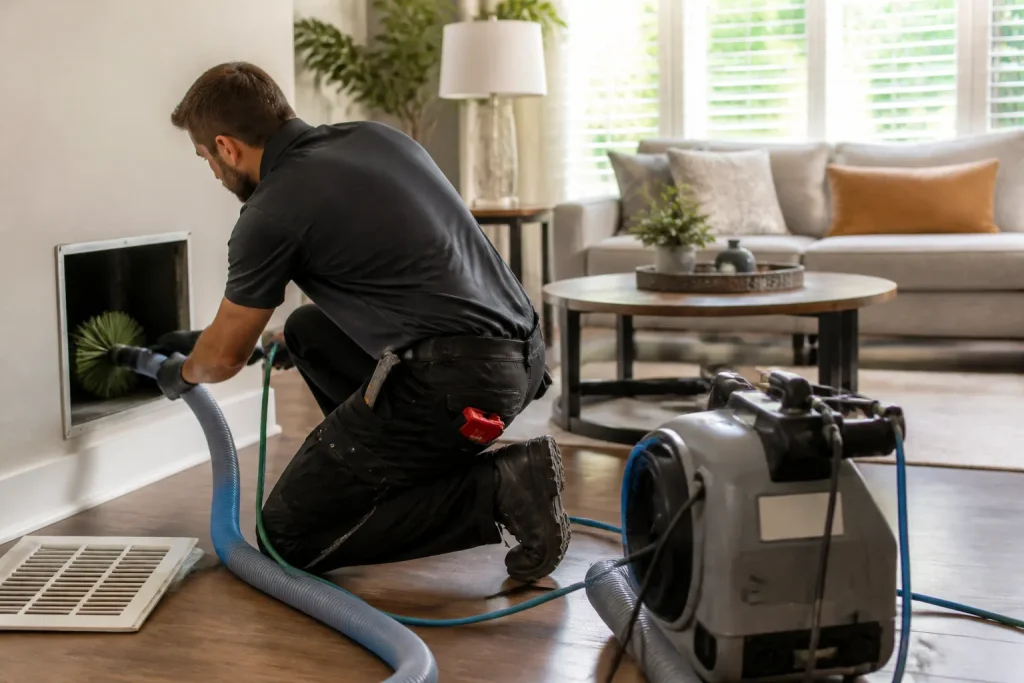
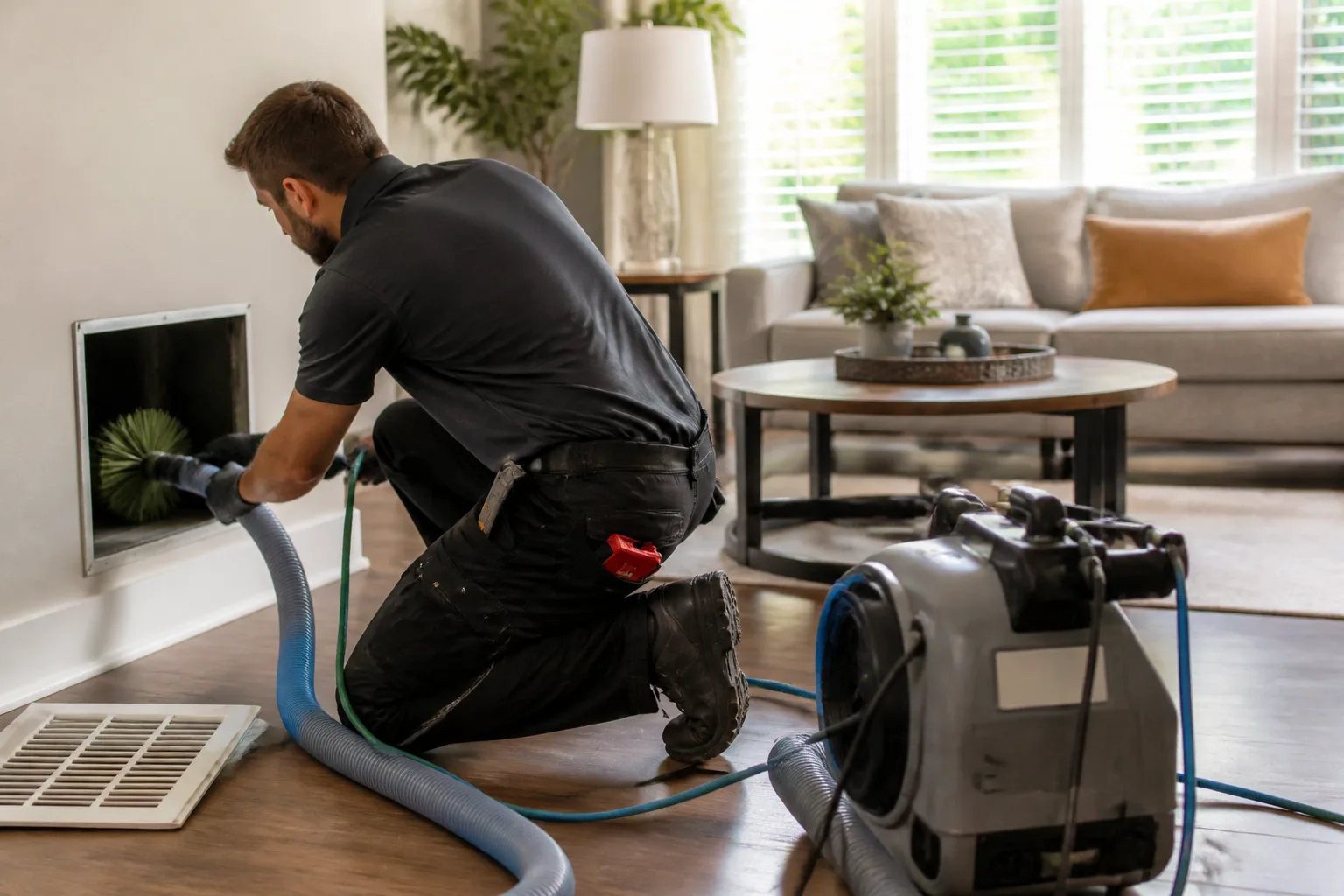
- Borescope camera inspection of the duct interiors. This is how a technician confirms contamination rather than assuming it from the event. We run Rotobrush and Nikro equipment precisely because these tools are purpose-built for this kind of interior work.
- A pressure differential check. Comparing static pressure across the system reveals leaks and collapsed or disconnected runs. A duct system that lost 20 percent of its air to a disconnected joint isn’t just inefficient; it may be pulling attic or crawlspace air into your living space.
- A written scope of work. What will be cleaned, what will be sanitized, and what will be repaired and sealed. If a company can’t put the plan in writing before work starts, that’s your answer.
- A one-flat-price commitment per system. Cleaning a whole system is a system-level job, not a per-vent job. Be wary of anyone pricing by the register.
This is also why a company may offer same-day inspection but schedule the actual cleaning for the next opening. Real cleaning equipment needs staging, and it takes time to do right. Anyone promising to fully clean a contaminated system within an hour of walking through the door is cutting corners somewhere.
Insurance Documentation: What to Photograph and What to Ask For
If a fire, water event, or remediation project is behind your duct situation, there’s a good chance your insurer will cover some or all of the work. The claim lives or dies on documentation, so take photographs before anything is moved or cleaned.
- Photograph the event itself. The source of the water, smoke damage near registers, visible rodent evidence, or the disturbed remediation area.
- Photograph every register and return. Both the grille and a clear view into the duct if you can safely get one.
- Photograph the equipment area. Furnace, air handler, and coil. Visible accumulation here supports the case that contamination reached the system.
- Keep a dated record of your shutdown steps. When you turned the system off and what you did. This demonstrates you mitigated the damage, which many policies require.
Ask your duct cleaning company for a written scope-of-work report that includes inspection findings, photos from the borescope, and a description of the work to be performed. Established industry standards for duct cleaning and assessment exist, and a legitimate company will be able to reference them and structure a report the way claim adjusters expect to see it. If the report is a one-page invoice with the word “cleaned” on it, push back.
When it comes time to do the work, HVAC cleaning and duct cleaning often run together after a fire or water event, because the equipment and the ductwork share the same contamination pathway. A company offering the full scope under one roof saves you from coordinating two contractors and two sets of paperwork.
Same-Day Cleaning vs. Same-Day Inspection: Know the Difference
Here’s where honest companies separate themselves. Same-day inspection is realistic. Same-day full-system cleaning after a genuine contamination event is often not, and a company that tells you otherwise is telling you what you want to hear.
Schedule the inspection first. It confirms what kind of emergency you’re dealing with and what equipment and staging the job requires. In many cases, the inspection concludes that a shutdown-and-schedule approach is entirely adequate. That’s a good outcome. Your system is contained, the plan is written, and nobody’s been rushed into a larger bill.
The urgency of the cleaning itself depends on the event. Sewage and rodent situations carry more urgency than a smoky smell after a kitchen fire. A professional can tell you which bucket you’re in once they’ve looked. Anyone who skips that step has put their sales process ahead of your home.
Related Services in White Rock
Duct contamination rarely travels alone. If you’ve had a rodent problem, the dryer vent is worth inspecting at the same time, since lint and nesting material in a vent line can turn a small problem into a fire risk. Our dryer vent cleaning service addresses that risk directly. For the full-system overview, start here: Air Duct Cleaning White Rock. And if the inspection turns up leaks, disconnected runs, or degraded sealant, duct repair and sealing is what actually stops the contamination from coming back. We clean the system, then we seal it. That second step is the one most crews skip, and it’s the step that makes the cleaning last.
We also use air quality products from Honeywell, Aprilaire, and Abatement Technologies as part of sanitizing and filtration work, and Guardsman-grade sanitizing after cleaning to leave ducts protected rather than merely spotless. It’s the standard we’ve seen perform in commercial and medical settings, and it works just as well in a White Rock house.
What happens when you call
- 1
A real person answersNo phone trees – you reach a local pro.
- 2
You get an upfront price rangeHonest numbers before anyone is dispatched.
- 3
A background-checked tech heads outLicensed & insured, dispatched right away.
- 4
You approve before work beginsNothing starts until you say go.
The Bottom Line
If you remember three things from this page, remember these:
- Turn the system OFF at the thermostat and the breaker, and block the registers before you do anything else.
- Distinguish the event from the contamination. Only four situations are real emergencies, and most White Rock duct issues are not.
- Insist on a visual inspection with a borescope before you accept any quote. A number without an inspection is a guess.
If you’re in White Rock and need help, Air Duct Cleaning White Rock offers free estimates. Call (855) 337-2035. We answer 24/7, with fast dispatch from 7am to 7pm, Sunday through Friday. One flat price per system agreed before work starts, and before-and-after photos of your own ducts so you know exactly what was done.
Frequently Asked Questions
No. Turn the thermostat to OFF and switch the breaker before you clean or run anything. Running the blower pushes contaminated air into every room and can seed the coil and equipment with material that’s far harder to remove later. Call (855) 337-2035 for an inspection once the system is shut down.
There’s no legitimate flat answer before an inspection, and anyone who gives you one over the phone is guessing. Cleaning is priced per system, not per vent, and the written estimate you receive after inspection sets the final price. The estimate itself is free. Call (855) 337-2035 for an exact quote.
Sometimes inspection happens same-day, but full cleaning after a real contamination event usually gets scheduled for the next opening so equipment can be staged properly. Same-day inspection plus a scheduled cleaning is the honest version. Anyone promising otherwise is cutting corners. We answer 24/7 at (855) 337-2035, with fast dispatch from 7am to 7pm, Sunday through Friday.
Inspection findings, borescope photos, a description of the work, and reference to the applicable industry standards for cleaning and assessment. Request it in writing before work begins. A one-line invoice will not hold up with an adjuster. Call (855) 337-2035 if you want to talk through what a report should include.
Written by the team at Air Duct Cleaning White Rock.
Need Air Duct Cleaning Help?
Call Air Duct Cleaning White Rock - the local pro we connect you with is licensed and insured, with free written estimates in White Rock.
(855) 337-2035